Executive Marble Run

A toy I got at Half Price books on clearance for $2. One slight problem: the ‘runs’ are flat, so I had to improvise with coins to make inclines. Before you watch this, ask yourself, are you sure you have nothing better to do?

You may want to check out some more expensive but possibly working marble runs.

UPDATE: Apparently this very same kit is selling on Amazon for $35!

Executive Marble Run

And others have had greater success:

Posted in Uncategorized | Tagged | Leave a comment

I’m not sure what she’s doing here, but it’s cool

Posted in Uncategorized | Tagged | Leave a comment

O’Neill space colonies revisited

The High Frontier: Human Colonies in Space: Apogee Books Space Series 12

This book originally came out in the 1970s and I have read it many times. After re-reading it this past month, I have to say that while the vision of space colonization is timeless, the technological underpinnings haven’t aged well.

O’Neill wanted to build giant space colonies using the space shuttle for transportation. But the Shuttle never became an economical means of space transportation.

O’Neill conceived of constructing giant solar panel satellites that would beam microwave power down to Earth. He justified this because panels in space can receive full solar flux 24/7, hence would be more efficient than panels on Earth. However, photovoltaic panel costs have come down so significantly that the relative inefficiency is no longer an issue.

O’Neill envisioned a largescale lunar mining operation that would involve a significant human work force. Today — and frankly even back then — practicality is on the side of sending teleoperated robots for mere millions of dollars in transportation costs, compared to billions for placing humans and human logistics on the Moon.

O’Neill went into detail about building an electromagnetic catapult on the Moon so that payloads could be cheaply launched into space. Today we know there is water on the Moon, which can be electrolyzed into hydrogen-oxygen fuel for automated shuttles that can transport cargo from lunar surface to orbit at a cost of less than a dollar per pound.

O’Neill also thought it would be necessary to visit the asteroids for the metals and water necessary to support space colonies. We now know that such materials are found in abundance on the lunar surface.

O’Neill preached Big is Better, and so his Island Three space colony design was a cylinder four miles in diameter and twenty miles long. Today we recognize that this would make it a prime terrorist target, but an even bigger sticking point is that after Fukushima we no longer have blind faith in what engineers tell us are safety factors. No longer can anyone say, “What could possibly go wrong?” without ironic overtones.

So is the dream of space colonization dead? Not at all, but I think we do have to think differently.

Let’s start by sending robots to the Moon to prospect for gold, platinum, palladium, and other ‘rare earth’ metals. If we keep the robots small, this will only cost millions and a private company can afford the investment in infrastructure.

By plying back profits, we can gradually scale up the operation. Once the transportation system has a big enough capacity to accommodate tons of shipment daily, we can construct a space colony in lunar orbit. It seems to me that lunar polar orbit, not L5, is the place for the first space colonies because it is closer to the source of most of the materials.

Finally, let’s keep space colony design modular. Even the biggest space colonies should be constructed out of modules no larger than a cruise ship. Why? Because we have experience building something of that size. Thus here is what a single colony module would roughly look like in size and shape compared to a large cruise liner:
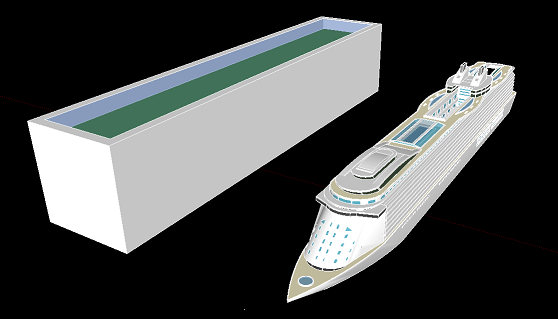
space colony 01

A complete ring would consist of 72 modules, which would be far enough apart that in the event of a crisis they could easily break free of the ring. And thus the complete colony would look like so:
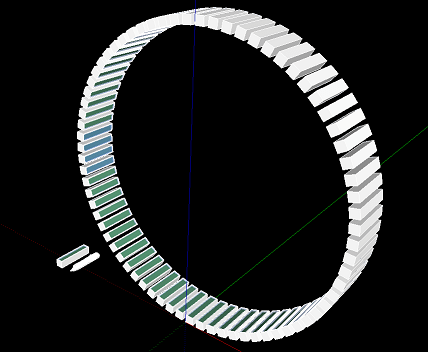
space colony 02

Now, modular concepts for space colonies have been discussed for some time now, but usually it’s for transition to the big ‘monoshell’ islands. I think that at the end of the day it’s much safer to stick with modules. The ship-sized modules shown here would each have an open surface area of five acres, and that seems more than adequate to avoid claustrophobia.

Finally, O’Neill described the construction of a colony in terms of a large labor force involving thousands of human workers. Today it’s far more practical for robots to assemble the colonies. Once they finish one, they can start on another, and another, and another. And say, do we really need robots? Why not just build a giant 3D printer to create the colony modules?

O’Neill was considered farsighted because he envisioned a geometric population growth rate for space colonization. But it’s possible the growth rate will be more like one, two, three, infinity. That is, once we have just a handful of colonies, we’ll be able to build a 3D printer for colony modules, and then we can print as many colonies as we want on demand.

So the dream isn’t dead, just delayed. And like pressure building in a boiler, when it’s finally released it will be explosive in its expansion. All we need now is cheap access to space. And we’re waiting on Elon Musk for that.

Posted in Uncategorized | Tagged , , , | Leave a comment

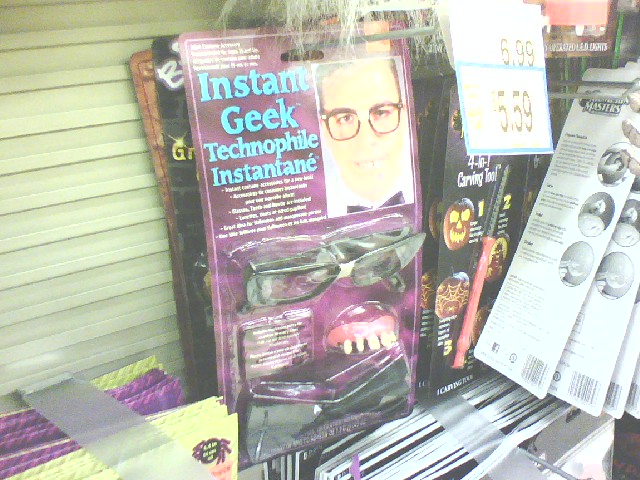
This just perpetuates stereotypes

1012031648

Although I do like the title, technophile instantané. Not enough to wear crooked prosthetic teeth, but it can’t be denied that everything said in French sounds sleeker. Enchanté!

Posted in Uncategorized | Tagged , | Leave a comment

USB Plasma Ball

Got me a USB plasma ball from Amazon.

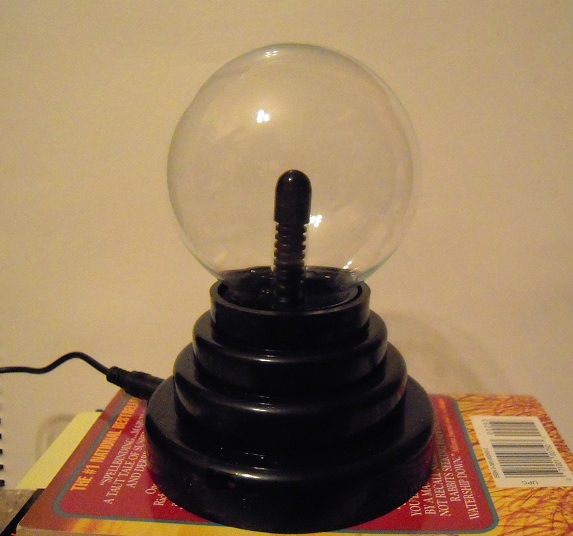
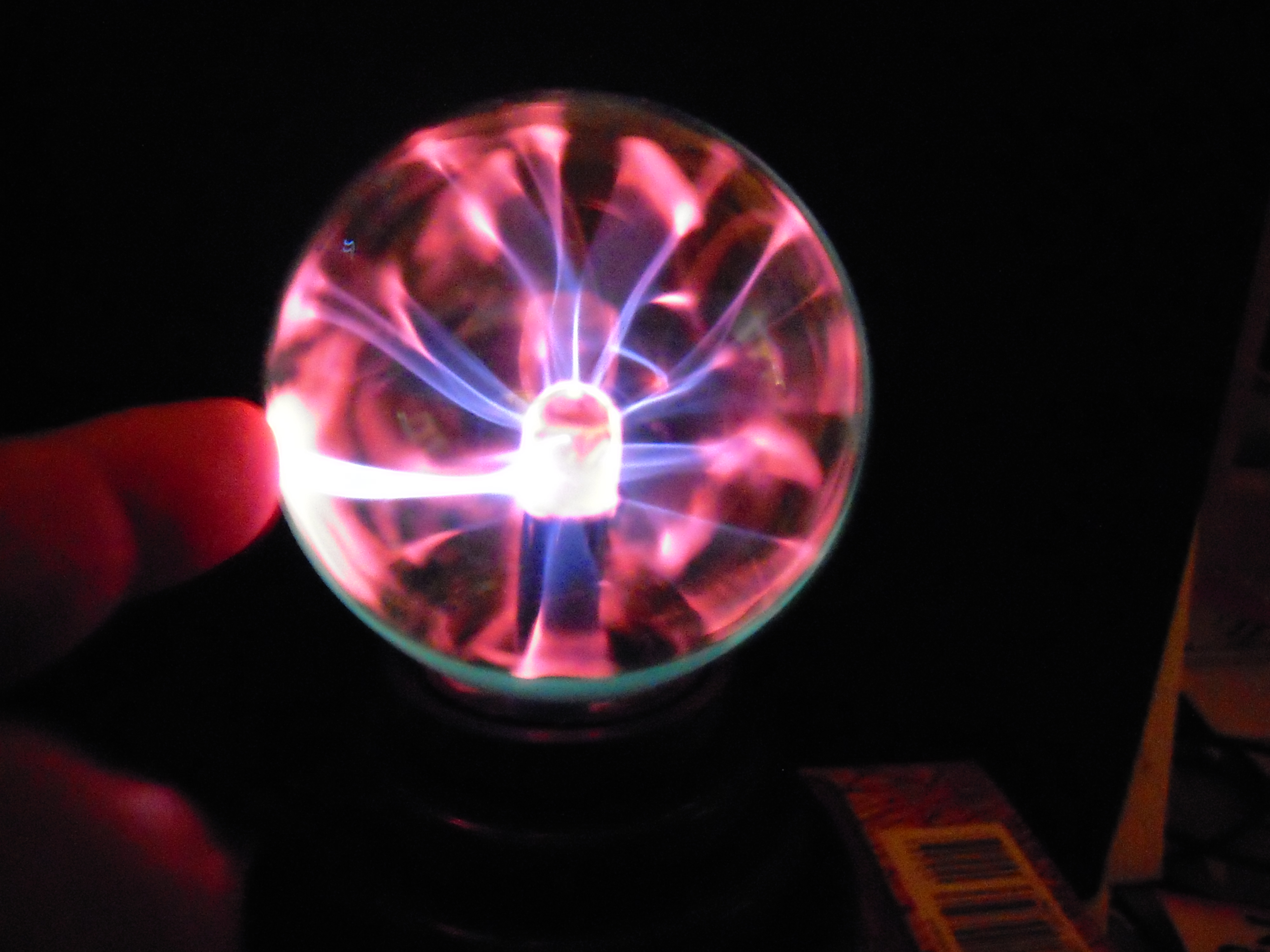
ball1

It’s about the size of an orange. It plugs into your computer USB port for power.

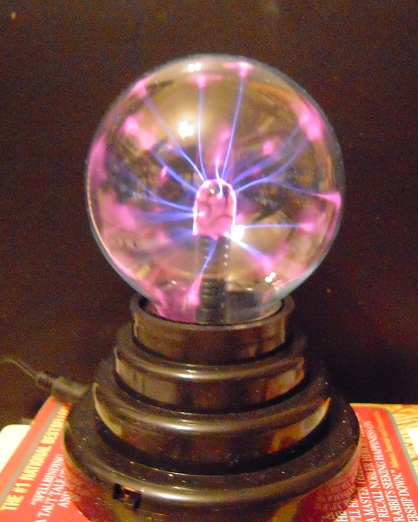
ball2

It’s actually fairly bright in room lighting, but looks better in darkness.

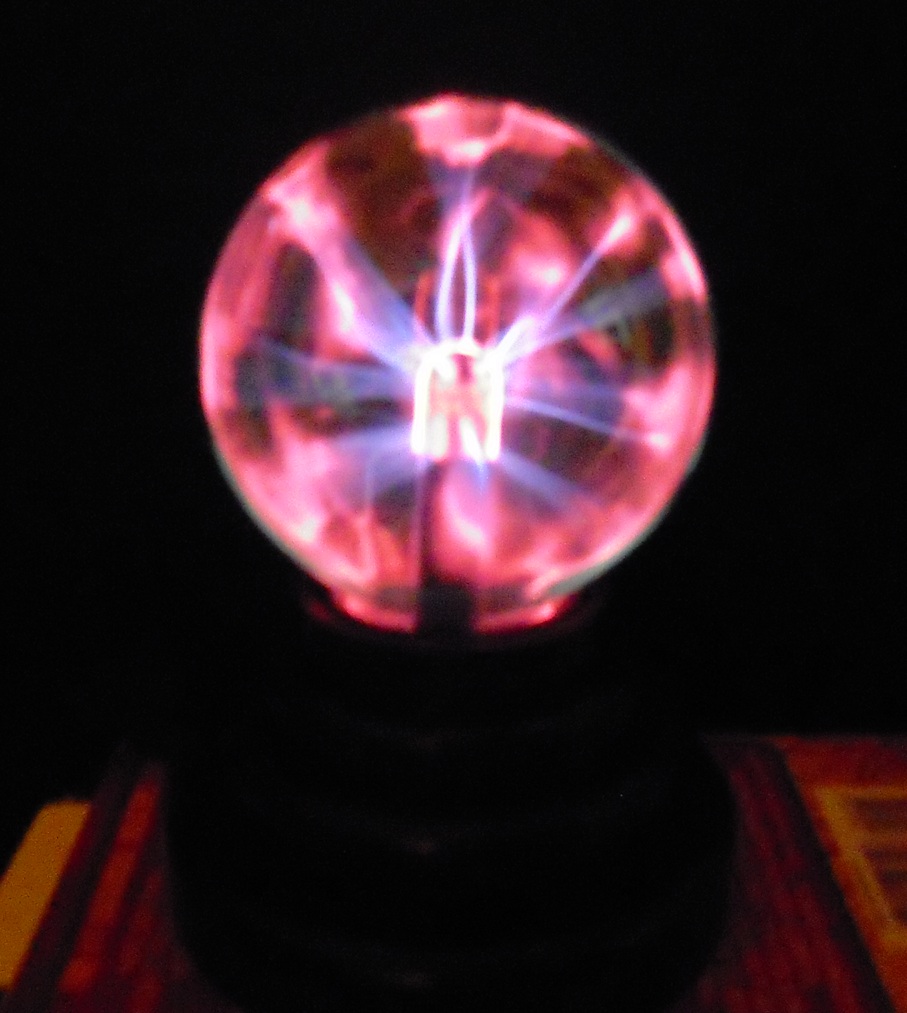
ball3

If you can focus the camera, that is.

As you probably already know, when you touch it an arc jumps from the center to your finger.

ball4

Cool!

Here’s a video in action:

You can buy one for $7.95 from Amazon here:

LE USB Powered Plasma Ball

By the way, it will also run on a five volt ‘wall wart’ but you’ll need to buy one separately (assuming you don’t have a drawerful already).

I wonder if this could be powered by a 9 volt battery through a 7805 (ie, 5 volt) voltage regulator. Maybe I’ll try that, but I thought I would play with the plasma ball for a bit before I do anything that might break it.

UPDATE OCT 12: The plasma ball seems to be losing its strength. It still makes a visible arc between the center and my fingers, but otherwise it’s not that impressive to look at. Buyer beware, I guess.

Posted in Uncategorized | Tagged , , , | Leave a comment

Hey, someone has confidence in me!

ezcom

Two years ago, this was selling for $24. I passed it up because I’ve always thought of this as a screen handle, not as a business name. Apparently, though, someone thinks that I’ve generated quite a bit of ‘cachet’ with the brand!

Posted in Uncategorized | Tagged | Leave a comment

Mini-Review on The One World Schoolhouse

The One World Schoolhouse: Education Reimagined

It may seem odd that I read this book but haven’t actually viewed a single video from Khan Academy. But I’m an old guy, and that’s how I roll. Anyway, as I understand it, Khan Academy a series of videos on topics of math and science, narrated over a visual of using Microsoft Paint as a substitute for a blackboard. As such, I fail to understand what the fuss is about.

Take a standard text book and rewrite it into short units of one or two pages each. Allow independent study. And if you don’t want to waste paper, post it as an ebook. Is this ‘revolutionary’ in the year 2013?

With regard to education, there’s so much more potential for computers to be used in an environmentally immersive, interactive, and hands-on experience.

As an example, I humbly submit a teaching video on the Arduino, using Sketchup graphics:

Also I made a video series on how to model molecules in Sketchup, everything from water to the DNA helix. Here for example is the one on benzene:

You can check out the entire series of modeling molecule videos here.

Now, this isn’t about the quality of my work (which I’ll admit is not professional). It’s about the potential of the technology. And there are people out there who are doing far more impressive stuff. Those people should receive attention and grant money, and I hope they do.

Posted in Uncategorized | Tagged , , , | Leave a comment

Thomas Edison Quotes (with commentary)

From Brainy Quotes:

The most certain way to succeed is always to try just one more time.

(Doing the same thing over and over again and expecting different results is not fanaticism, it’s quantum mechanics.)

Many of life’s failures are people who did not realize how close they were to success when they gave up.

(May not apply when digging for treasure in a mine field.)

Non-violence leads to the highest ethics, which is the goal of all evolution.

(Said the lion to the lamb.)

If we did all the things we are capable of, we would literally astound ourselves.

(Astounding ourselves isn’t always a good thing!)

To invent, you need a good imagination and a pile of junk.

(I’m halfway there!)

I never did a day’s work in my life. It was all fun.

(My career has been sidetracked.)

There is no substitute for hard work.

(Then there is no substitute for hard fun?)

Discontent is the first necessity of progress.

(Instant gratification is its own reward.)

I am proud of the fact that I never invented weapons to kill.

(Well, at least he never invented an electric chair big enough to fry more than one elephant at a time.)

Hell, there are no rules here – we’re trying to accomplish something.

(And I still say, WEAR EYE PROTECTION.)

Posted in Uncategorized | Tagged , , | 1 Comment

How not to blow up your LEDs

led kablooie

The above is what happened to an LED that was connected to a 9 volt battery without a current-limiting resistor in series. It exploded like a firecracker and the moral of the story is, WEAR EYE PROTECTION.

The lesson of the story is that you should have a current-limiting resistor in series with your LED. But resistance is a trade-off: too little and you blow out the LED, too much and you consume unnecessary power in the resistor and dim the LED.

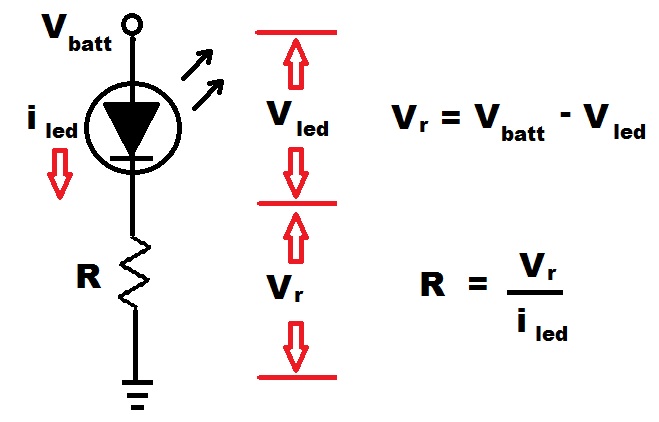
Fortunately, calculating the proper amount of resistance for an LED is very simple algebra. It looks like this:

led-resistor

Let’s take a real-life example. Here are the specs on a package of LEDs:

led pkg 1

For a 9 volt battery, our first formula becomes:

V(resistor) = V(battery) – V(led)

V(resistor) = 9 – 3.2

V(resistor) = 5.8 volts

And the value for the current-limiting resistor is:

R = V(resistor) / i(led)

R = 5.8 volts / 20 milliamps

R = 290 ohms

Any resistor above a value of 290 ohms should do fine. However, remember that resistor values sometimes have a tolerance of about ten percent, so a resistor that is labeled 300 ohms may actually be only 270 ohms. So really, why not go with something like 500 ohms minimum? You’ll have a nice safety factor and likely won’t notice the difference in brightness.

Oh wait — we also have to be concerned about not exceeding the resistor’s maximum power rating, which is typically 1/8 or 1/4 or 1/2 watt depending on the size.

For that we need this formula:

watts = voltage x current

watts = 5.8 v x 20 ma

watts = 116 milliwatts

Which is less than 1/4 watt (ie, 250 milliwatts). So a medium-sized resistor will do fine.

When all is said and done, you probably don’t want to connect a nine volt battery to an LED because you’ll be burning most of the power through that resistor without getting any light for it. As you can see from the photo, I used a 9 volt here for the sake of drama. Using a 5 volt source without a current-limiting resistor may not even burn out your LED, or will just burn it out without an explosion. But I’m not guaranteeing that either way. Did I mention, WEAR EYE PROTECTION!

Posted in Uncategorized | Tagged , , | Leave a comment

Walking the Synchronous Path

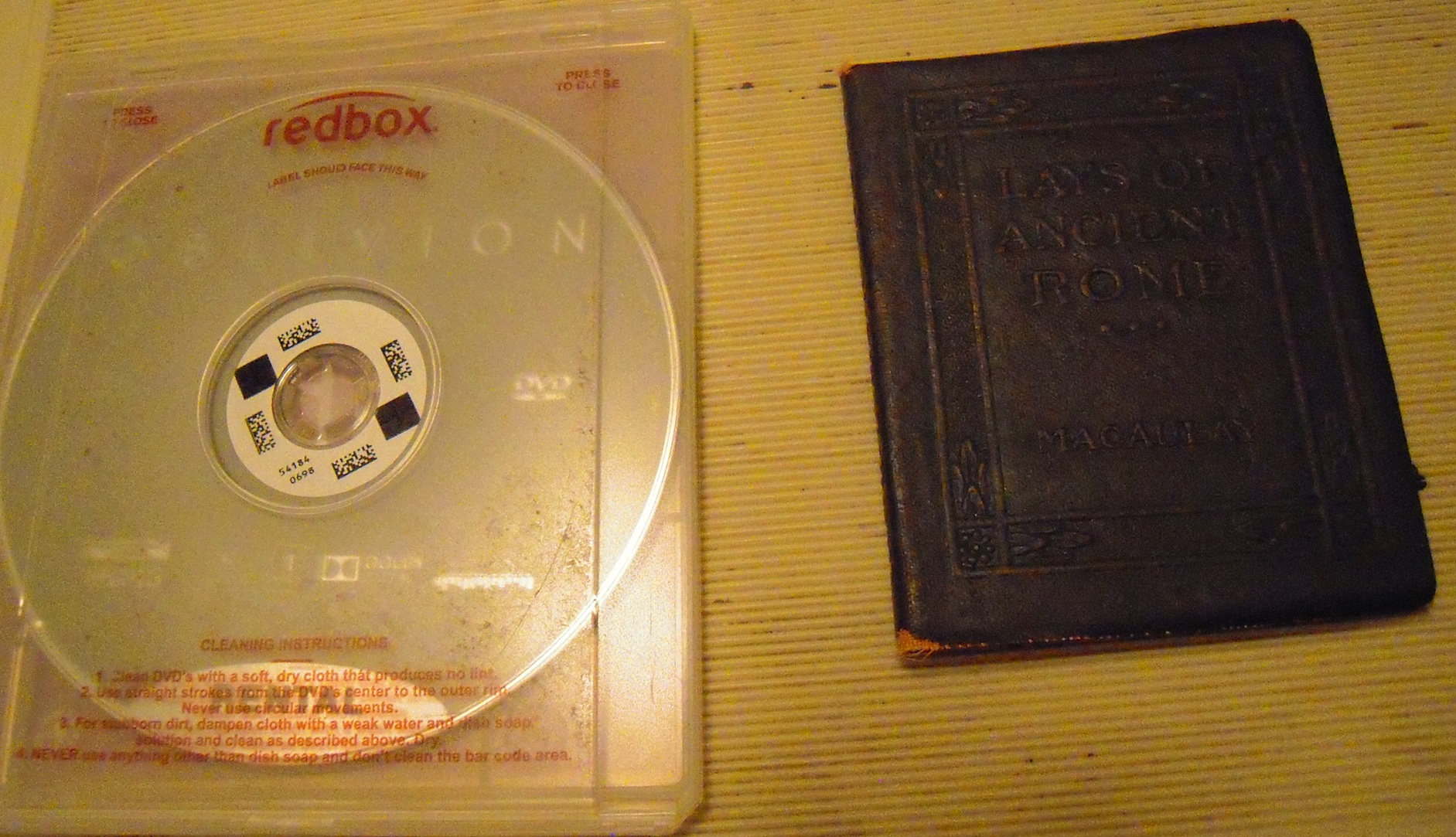
DSCN6293

Yesterday I watched the movie, Oblivion. In the movie, Tom Cruise’s character descends through a hole into the ruins of a library. On a table is an old book titled, “The Lays of Ancient Rome.”

Now, the other day, I had gone to Redmond to visit McDonald’s Book Exchange. Redmond is still there, but instead of the exchange there was a hole in the ground. When I got back home, I discovered that the shop had moved. Today I went to the new location.

So if you’re following this, you see that I encountered a hole, and then I entered a place filled with old books. And so what happened next?

On a table I ‘just happened’ to find a book entitled, “The Lays of Ancient Rome.”

The book cost ten dollars, perhaps the most expensive book (and oldest) in the exchange. But I thought, “I’m going to follow the Synchronous Path and see where it leads.”

My, there sure is a lot of thunder right now.

Frankly, though, for ten dollars I expect more.

Posted in Uncategorized | Tagged , | Leave a comment