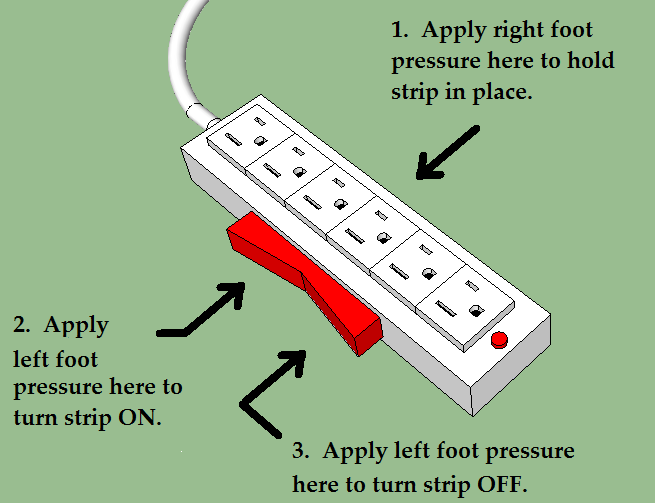
Foot operated power strip

foot power strip

Please check out my product idea at Quirky. Thanks!

Posted in Uncategorized | Tagged , , , | Leave a comment

High Moon (reposted)

(In honor of China’s Yutu probe, I thought I’d repost this entry from Feb. 25, 2011.)

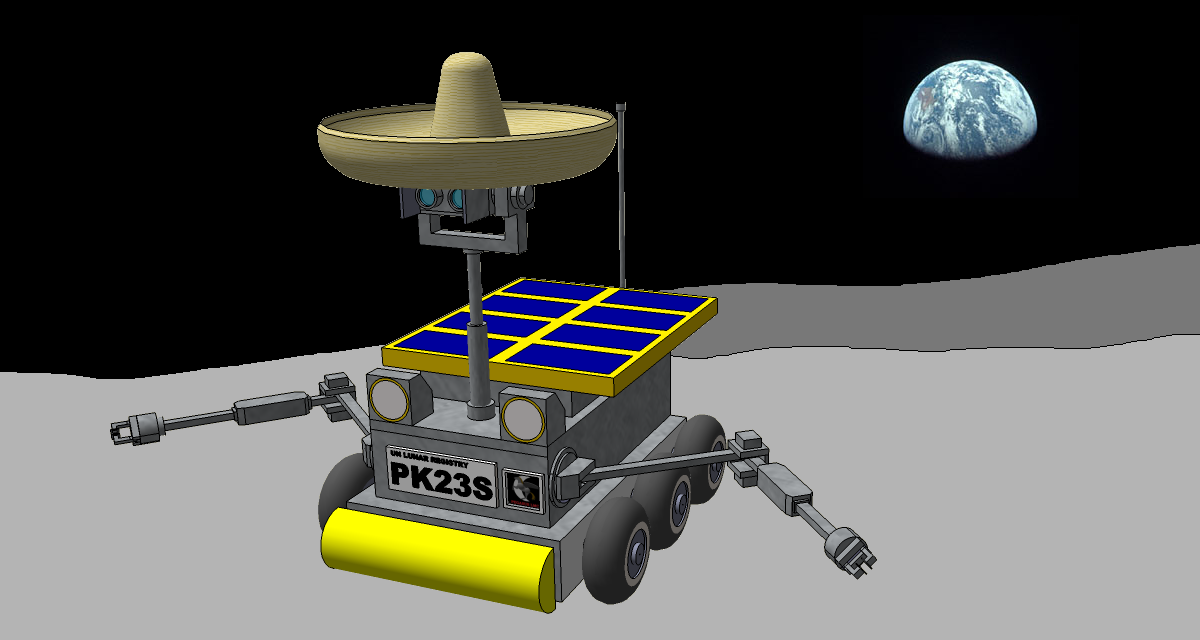
Way back when, I wrote a science fiction novelette called “High Moon,” about teleoperated lunar mining robots in Wild Old West Cosplay. It appeared in the May 2005 issue of Analog Science Fiction and Fact Magazine, the longest-running print magazine in the science fiction genre.

Well, I have published it online at FictionPress.com. Be sure to adjust the font and width settings to your liking. And with that said, the link is here.

Posted in Uncategorized | Tagged , , , , , , , | Leave a comment

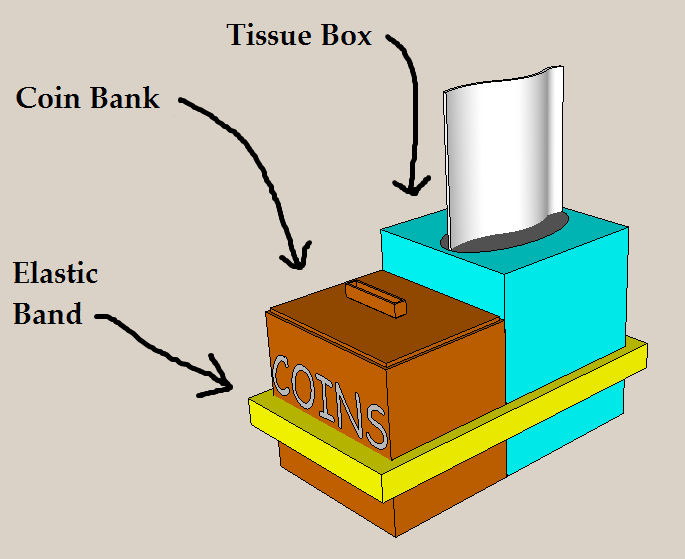
Product Idea for Quirky.com

tissue box coin bank

Tissue Box Holder/Coin Bank

Posted in Uncategorized | Tagged , , | Leave a comment

China’s Moon Rush

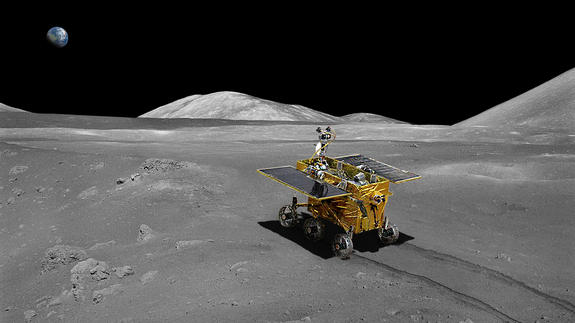
jutu.jpg

The successful landing of the Yutu lunar rover enables China to explore the surface of the Moon and take the first steps toward successfully utilizing its material resources.

The next logical step will be to send prospecting robots, then mining robots, then the transportation infrastructure to send mined resources back to Earth. That last step is problematic, but it can be done robotically for much less than the cost of shipping payloads from Earth to Moon.

As I survey online comments to the articles on this accomplishment, one thought occurs to me: We can blame and finger-point, but unless we compete, we’re going to lose by default.

Posted in Uncategorized | Tagged , | Leave a comment

The CRISP Revolution

Today I was thinking, “What are the fundamental technologies of the economy of the future?” And I came up with the following acronym:

C – Computers.

R – Robots.

I – Internet.

S – Solar (Power).

P – (3D) Printers.

Now, you could argue that biotechnology should be on the list, but I think of biotechnology as a ‘second level’ technology. Not that it isn’t important, but it’s being driven by computers, robots, the internet, and printers, and not vice versa. Likewise social media is derived from the internet.

What to do with this shiny new acronym now that we have it?

First, it helps clarify thinking about the direction that engineering education should take in the twenty-first century.

Second, it makes it clear that the technology of the future is going to soon create an economic system where intelligence, physical labor, information, energy, and manufacturing capacity are virtually limitless.

Something is wrong then, when the present economic debate is about cutting pensions and controlling health care costs. For that matter, why are Japan and China fighting over oil and gas resources when solar power can provide far more energy without threat of military conflict? And what is the relevance of ‘global trade’ of China vs. US in a world where ‘print shops’ in your home town can print food, automobiles, and medicine?

The CRISP Revolution is not really about technology as it is about changing our view of technology. If we focus on advances in these areas, we see the future in a different light. It is a very positive light. We can still botch it, and maybe that’s the way to place the bet. But there is hope for the future, and humans will have to work hard to mess it up.

Posted in Uncategorized | Tagged , , , , , | Leave a comment

The Future According to Video Games

As for myself, I look forward to a happy future in which solar energy provides all the power we need and 3D printers meet every material need. Space colonies become paradises and the robots are our friends. You may call me a dreamer, but I’m not the only one.

Posted in Uncategorized | Tagged | Leave a comment

Alien Archaeology

alien or not

This is from a 1999 archaeological excavation in Mexico. The caption at Live Science says, “It is common for people to wonder if skeletons such as these are alien rather than human.” No freaking fooling!

Posted in Uncategorized | Tagged , | Leave a comment

Executive Marble Run

A toy I got at Half Price books on clearance for $2. One slight problem: the ‘runs’ are flat, so I had to improvise with coins to make inclines. Before you watch this, ask yourself, are you sure you have nothing better to do?

You may want to check out some more expensive but possibly working marble runs.

UPDATE: Apparently this very same kit is selling on Amazon for $35!

Executive Marble Run

And others have had greater success:

Posted in Uncategorized | Tagged | Leave a comment

I’m not sure what she’s doing here, but it’s cool

Posted in Uncategorized | Tagged | Leave a comment

O’Neill space colonies revisited

The High Frontier: Human Colonies in Space: Apogee Books Space Series 12

This book originally came out in the 1970s and I have read it many times. After re-reading it this past month, I have to say that while the vision of space colonization is timeless, the technological underpinnings haven’t aged well.

O’Neill wanted to build giant space colonies using the space shuttle for transportation. But the Shuttle never became an economical means of space transportation.

O’Neill conceived of constructing giant solar panel satellites that would beam microwave power down to Earth. He justified this because panels in space can receive full solar flux 24/7, hence would be more efficient than panels on Earth. However, photovoltaic panel costs have come down so significantly that the relative inefficiency is no longer an issue.

O’Neill envisioned a largescale lunar mining operation that would involve a significant human work force. Today — and frankly even back then — practicality is on the side of sending teleoperated robots for mere millions of dollars in transportation costs, compared to billions for placing humans and human logistics on the Moon.

O’Neill went into detail about building an electromagnetic catapult on the Moon so that payloads could be cheaply launched into space. Today we know there is water on the Moon, which can be electrolyzed into hydrogen-oxygen fuel for automated shuttles that can transport cargo from lunar surface to orbit at a cost of less than a dollar per pound.

O’Neill also thought it would be necessary to visit the asteroids for the metals and water necessary to support space colonies. We now know that such materials are found in abundance on the lunar surface.

O’Neill preached Big is Better, and so his Island Three space colony design was a cylinder four miles in diameter and twenty miles long. Today we recognize that this would make it a prime terrorist target, but an even bigger sticking point is that after Fukushima we no longer have blind faith in what engineers tell us are safety factors. No longer can anyone say, “What could possibly go wrong?” without ironic overtones.

So is the dream of space colonization dead? Not at all, but I think we do have to think differently.

Let’s start by sending robots to the Moon to prospect for gold, platinum, palladium, and other ‘rare earth’ metals. If we keep the robots small, this will only cost millions and a private company can afford the investment in infrastructure.

By plying back profits, we can gradually scale up the operation. Once the transportation system has a big enough capacity to accommodate tons of shipment daily, we can construct a space colony in lunar orbit. It seems to me that lunar polar orbit, not L5, is the place for the first space colonies because it is closer to the source of most of the materials.

Finally, let’s keep space colony design modular. Even the biggest space colonies should be constructed out of modules no larger than a cruise ship. Why? Because we have experience building something of that size. Thus here is what a single colony module would roughly look like in size and shape compared to a large cruise liner:

space colony 01

A complete ring would consist of 72 modules, which would be far enough apart that in the event of a crisis they could easily break free of the ring. And thus the complete colony would look like so:

space colony 02

Now, modular concepts for space colonies have been discussed for some time now, but usually it’s for transition to the big ‘monoshell’ islands. I think that at the end of the day it’s much safer to stick with modules. The ship-sized modules shown here would each have an open surface area of five acres, and that seems more than adequate to avoid claustrophobia.

Finally, O’Neill described the construction of a colony in terms of a large labor force involving thousands of human workers. Today it’s far more practical for robots to assemble the colonies. Once they finish one, they can start on another, and another, and another. And say, do we really need robots? Why not just build a giant 3D printer to create the colony modules?

O’Neill was considered farsighted because he envisioned a geometric population growth rate for space colonization. But it’s possible the growth rate will be more like one, two, three, infinity. That is, once we have just a handful of colonies, we’ll be able to build a 3D printer for colony modules, and then we can print as many colonies as we want on demand.

So the dream isn’t dead, just delayed. And like pressure building in a boiler, when it’s finally released it will be explosive in its expansion. All we need now is cheap access to space. And we’re waiting on Elon Musk for that.

Posted in Uncategorized | Tagged , , , | Leave a comment