GMO versus pharmaceuticals: the case for stronger regulatory oversight

Here’s some stuff to consider about GMO.

1. GMO is not ‘the same as plant breeding,’ it is creating new protein sequences that have never before existed in nature.

2. An insecticide resistant GMO crop must produce heavy chemical doping in order to become resistant to what is otherwise a deadly poison, and antidotes have been known to have side effects as deadly as poisons.

3. Clinical trials for new drugs typically last twenty years, GMOs use three-month ‘feeding trials’ instead.

4. Despite extensive testing, new pharmaceuticals typically have fatal side effects but we are to believe that far less testing will result in GMOs that are perfectly safe.

5. Would you buy an ear of GMO corn if it came with a label warning of possible side effects such as ‘nausea, burning sensation, dizziness, vomiting . . . . ‘ yet such warning labels are typically attached to pharmaceuticals that have undergone decades of testing as ‘safe’ for a market of only a few thousand consumers, while GMO crops are being targeted to a market for millions.

Because GMOs aren’t simply shuffling around existing DNA protein sequences but rather are engineering protein sequences that have never existed before in nature, it stands to reason that they should be subjected to the same controls and testing utilized by an industry that already has extensive experience with creating new chemical compounds for human ingestion. That industry is the pharmaceuticals industry. Based on its experience — written in the blood of patients — the pharmaceuticals industry has adopted a system of lengthy clinical trials and extensive warning labels and a controlled distribution system that requires written authorization from a medical professional before the product can be obtained. And even so, people suffer unanticipated side effects and die from pharmaceutical drugs that were determined ‘safe’ via the exhaustive FDA review process.

In the case of GMOs, we’re disregarding all that industrial experience and saying, “Yep, the cows are still alive after three months, it must be okay to give it to billions of people.”

Pharmaceutical drugs can often be expressed in simple formulas less than one line in length. A child could construct a ball-and-stick model of most pharmaceutical drug molecules in a matter of minutes. In contrast, proteins are the equivalent of molecular robots with thousands of atoms folded into precise configurations. In the same way that a computer program of millions of bytes can be corrupted by the change of a single bit, so too are the functions of proteins radically altered by the change of a single atom.

Can GMOs be safe? Yes, with clinical testing, potential side-effects warning labels, and a distribution system controlled by licensed physicians. We do that with relatively simple pharmaceutical drugs, we should do that with far more complex protein modifications. Of course we won’t, because there isn’t going to be a market for corn that you need a prescription to buy. Especially if it has a peculiar ’roundup-resistant’ aftertaste.

But the question is not whether we want to be scientific about GMOs, because of course we do. The question is whether we want to lower the scientific standard for regulatory oversight of introducing complex chemicals to be ingested into the human body. And if we do that, the quality of human life is going to be very different in the years to come.

Posted in Uncategorized | Tagged | Leave a comment

Quirky Update: Privacy -Cover USB Drive

privacy usb 03

One of my ideas has reached Expert Review at Quirky. It’s my design for a Privacy-Cover USB Drive.

Posted in Uncategorized | Tagged , | Leave a comment

Ten Predictions for 2014

1. 3D printing of manufactured goods will drive factories out of business.

2. 3D printing of food will drive farmers out of business.

3. 3D printing of body organs will extend human lifespan indefinitely.

4. 3D printing of solar cells will provide unlimited, pollution-free energy.

5. 3D printing of 3D printers will make high living standards available to all.

6. 3D printing of sophisticated computers and robots will lead to mass unemployment.

7. Public will demand economic reform to share the material wealth created by 3D printing.

8. The .1% will print invincible army of AI-controlled drones to herd the 99.9% into ‘relocation centers.’

9. Software for invincible AI-drone army will crash.

10. Economy of scarcity will be replaced by economy of self-improvement and personal enrichment.

Posted in Uncategorized | Tagged , , | Leave a comment

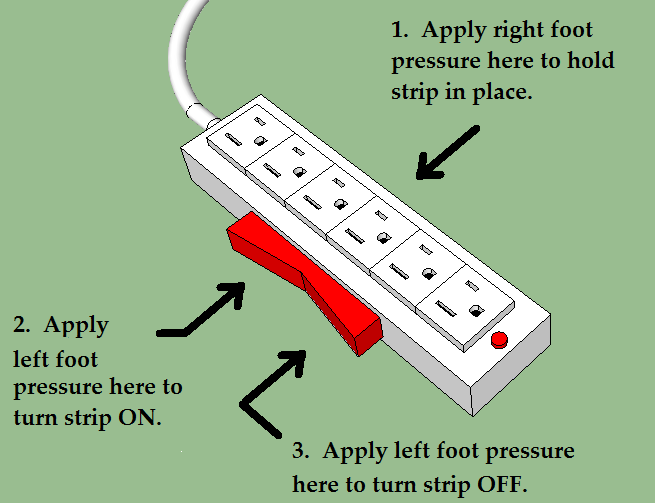
Foot operated power strip

foot power strip

Please check out my product idea at Quirky. Thanks!

Posted in Uncategorized | Tagged , , , | Leave a comment

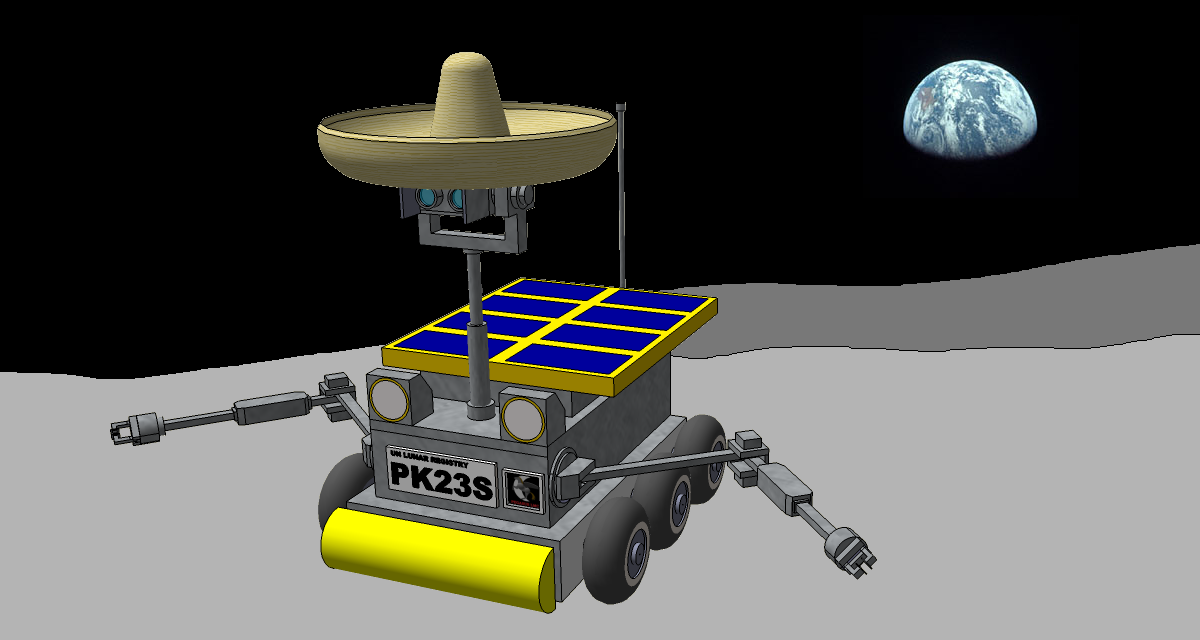
High Moon (reposted)

(In honor of China’s Yutu probe, I thought I’d repost this entry from Feb. 25, 2011.)

Way back when, I wrote a science fiction novelette called “High Moon,” about teleoperated lunar mining robots in Wild Old West Cosplay. It appeared in the May 2005 issue of Analog Science Fiction and Fact Magazine, the longest-running print magazine in the science fiction genre.

Well, I have published it online at FictionPress.com. Be sure to adjust the font and width settings to your liking. And with that said, the link is here.

Posted in Uncategorized | Tagged , , , , , , , | Leave a comment

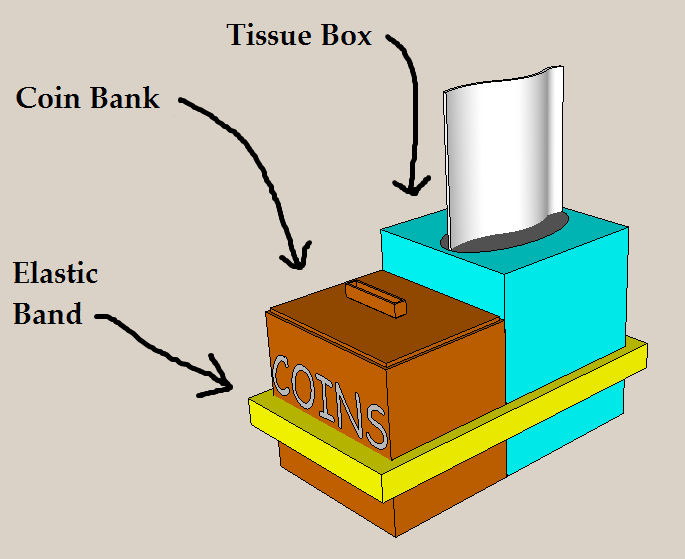
Product Idea for Quirky.com

tissue box coin bank

Tissue Box Holder/Coin Bank

Posted in Uncategorized | Tagged , , | Leave a comment

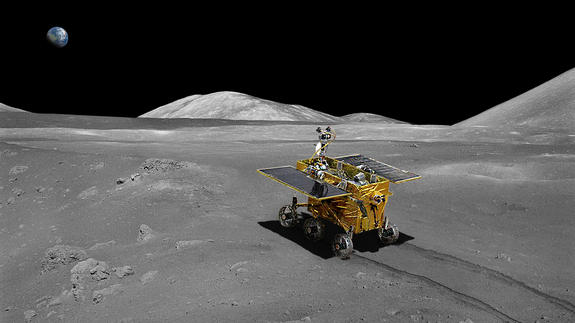
China’s Moon Rush

jutu.jpg

The successful landing of the Yutu lunar rover enables China to explore the surface of the Moon and take the first steps toward successfully utilizing its material resources.

The next logical step will be to send prospecting robots, then mining robots, then the transportation infrastructure to send mined resources back to Earth. That last step is problematic, but it can be done robotically for much less than the cost of shipping payloads from Earth to Moon.

As I survey online comments to the articles on this accomplishment, one thought occurs to me: We can blame and finger-point, but unless we compete, we’re going to lose by default.

Posted in Uncategorized | Tagged , | Leave a comment

The CRISP Revolution

Today I was thinking, “What are the fundamental technologies of the economy of the future?” And I came up with the following acronym:

C – Computers.

R – Robots.

I – Internet.

S – Solar (Power).

P – (3D) Printers.

Now, you could argue that biotechnology should be on the list, but I think of biotechnology as a ‘second level’ technology. Not that it isn’t important, but it’s being driven by computers, robots, the internet, and printers, and not vice versa. Likewise social media is derived from the internet.

What to do with this shiny new acronym now that we have it?

First, it helps clarify thinking about the direction that engineering education should take in the twenty-first century.

Second, it makes it clear that the technology of the future is going to soon create an economic system where intelligence, physical labor, information, energy, and manufacturing capacity are virtually limitless.

Something is wrong then, when the present economic debate is about cutting pensions and controlling health care costs. For that matter, why are Japan and China fighting over oil and gas resources when solar power can provide far more energy without threat of military conflict? And what is the relevance of ‘global trade’ of China vs. US in a world where ‘print shops’ in your home town can print food, automobiles, and medicine?

The CRISP Revolution is not really about technology as it is about changing our view of technology. If we focus on advances in these areas, we see the future in a different light. It is a very positive light. We can still botch it, and maybe that’s the way to place the bet. But there is hope for the future, and humans will have to work hard to mess it up.

Posted in Uncategorized | Tagged , , , , , | Leave a comment

The Future According to Video Games

As for myself, I look forward to a happy future in which solar energy provides all the power we need and 3D printers meet every material need. Space colonies become paradises and the robots are our friends. You may call me a dreamer, but I’m not the only one.

Posted in Uncategorized | Tagged | Leave a comment

Alien Archaeology

alien or not

This is from a 1999 archaeological excavation in Mexico. The caption at Live Science says, “It is common for people to wonder if skeletons such as these are alien rather than human.” No freaking fooling!

Posted in Uncategorized | Tagged , | Leave a comment