Digital Electronics Deconstructed

I’m reading Digital Electronics Demystified as a refresher. I have a degree in electrical engineering, but it’s been over thirty years since I graduated, and I’ve forgotten a lot.

Surprisingly, judging by this book, a lot hasn’t changed. I recognize topics like Karnaugh maps, for example. But I wonder, don’t they have programs to do that now?

I remember that I spent long hours working on circuit analysis while in college, only never to touch the stuff after I graduated. Then, a few years later, there was a point-and-click GUI circuit analysis package available for the PC for only a few hundred dollars. All that time and money wasted to learn something of no practical value to my engineering career.

I wonder how much digital logic design is being done these days, insofar as microcontroller chips are so cheap and can do all the logic via software.
Posted in Uncategorized | Tagged | Leave a comment

Plastics is the word

Well, if you’re my age or older, you know that in the movie The Graduate, the title character is advised on his career prospects with one word, “Plastics.” Actually, for the late sixties, the word should have been, “Microelectronics.”

Anyhow, I suspect that in the near term, the word will be plastics. After the dollar collapses, China will no longer be churning out stuff for the US, so we Americans will have to revitalize our manufacturing industry, and plastics manufacturing in particular.

In that regard, I’m reading a book called The Production and Properties of Plastics. It was written in 1947, so it’s kind of an historical introduction to the industry. What’s most interesting is the organic source of so many plastics — ground walnut shells, skim milk, things you’d never think of.

On the uninteresting but possibly important side is the names of so many plastics and chemical compounds that are being thrown at me. I’m not even sure what urea is, and that’s only four letters. At least I’ve learned the difference between thermosetting (sets permanently with temperature) and thermoplastic (sets repeatedly with temperature), and that there are five components of plastic: binder, filler, color, lubricant, and accelerator. Who knew?

More importantly, why would they want to know? Well, I have a suspicion that if 3D printing takes off, knowing the properties of plastic might come in handy. But don’t give me a pop quiz on this book. A lot of it is just a blur at this point. And yes, I intend to read something more modern, as soon as I finish this one.

Posted in Uncategorized | Leave a comment

The Wright Brothers

I’m reading The Wright Brothers: A Biography, by Fred Kelly. It’s the only authorized biography of the Wright Brothers. I’ve read two books on the Wrights before this, but this one really gets into the technical aspects.

It’s really surprising how little scientific, technical, and engineering work was done on flight before the Wrights, and how much of what was done was simply wrong.

Here are a couple of bicycle mechanics who never graduated from high school, and they are inventing the field of aeronautical engineering.

Anyhow, I’m up to the part where they flew. The reaction of most newspaper editors at the time was (a) it didn’t happen or (b) if it did it wasn’t important.

Posted in Uncategorized | Tagged | Leave a comment

Introduction to Kludge Electronics

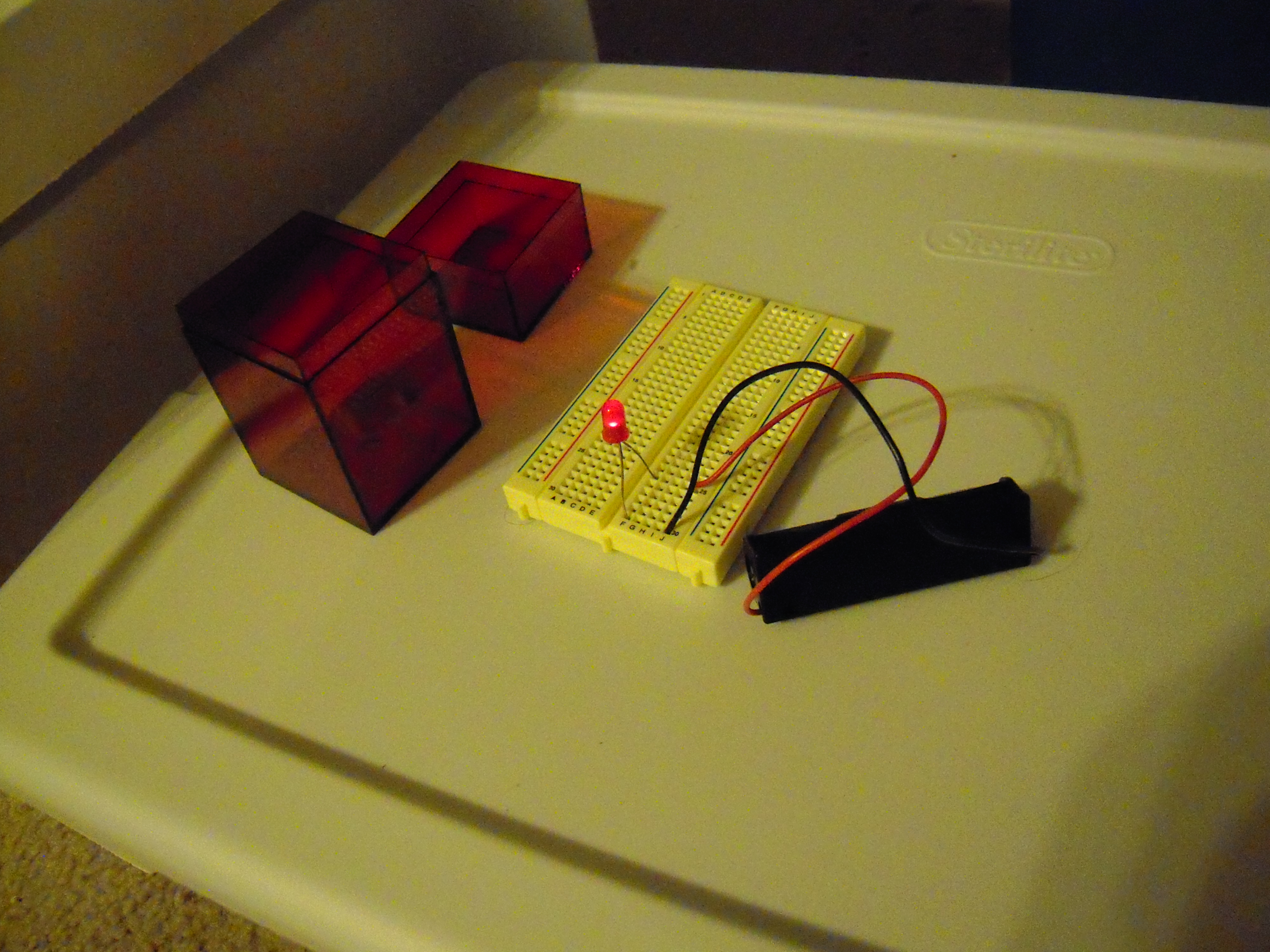
Breadboard prototype

Here’s the deal.  I want to put a battery plus an LED into a container.  But as you can see a breadboard and battery clip just doesn’t fit.  I don’t want to solder for something this simple, but I can’t just tape the LED to the battery because the leads of the LED aren’t long enough to stretch across the ends of the battery.

Soo . . .

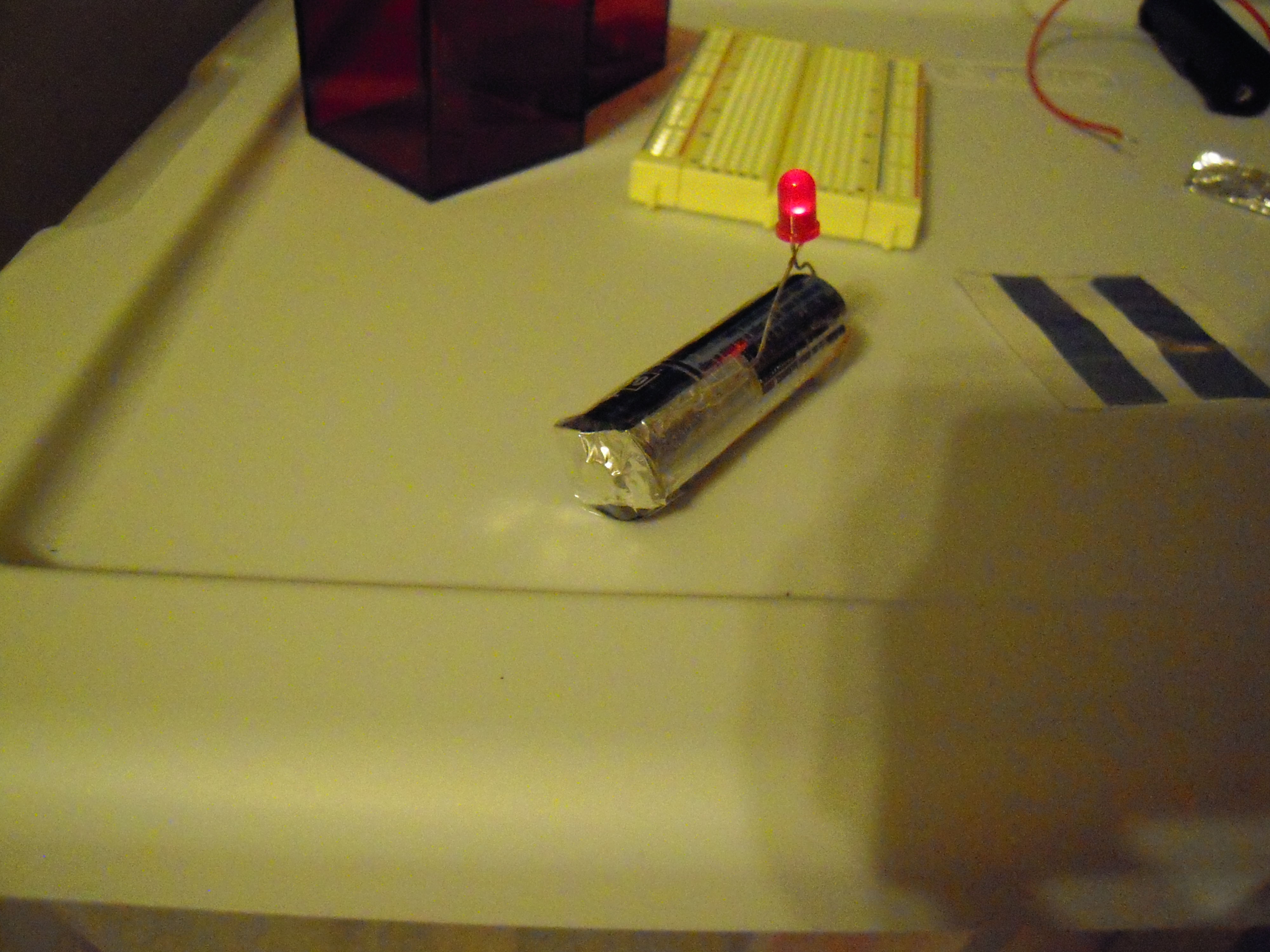
Foil prototype

The solution is to use adhesive tape and aluminum foil.  The foil is wrapped tightly around the pointy end of the battery, and then the LED is taped to the end of the foil and then one end of the battery.

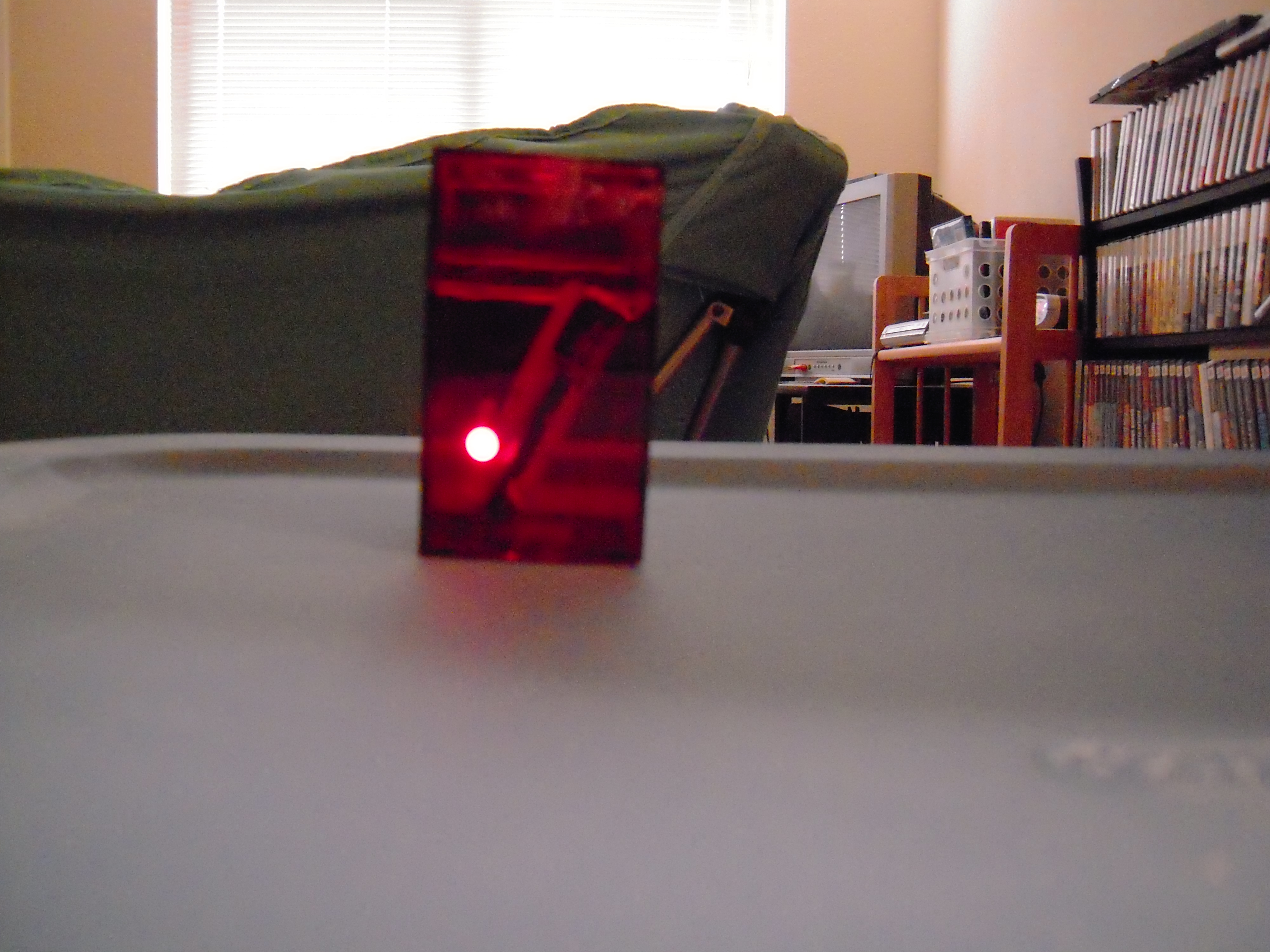
And there you go!  The completed project (if you can call it that) looks like this:

Completed project

Not exactly a marketable item, but the alternative was to use a breadboard ($8.95) and a battery clip ($1.98) for a total cost of nearly $11.  That’s about double the cost of the battery, LED, and box.  So this is one way to cut costs on making an item for personal use.

Posted in Uncategorized | Leave a comment

Visit to TAP Plastics

I visited TAP Plastics here in Bellevue.  Not much to report, it basically has supplies for plastics projects.  I picked up a book on vacuum forming.  If I were to do it, I would get a toaster oven for heating the plastic.

Posted in Uncategorized | Leave a comment