
Grok reports:
The Intuitive Machines lander, named Athena, touched down near the Moon’s south pole on March 6, 2025, but appears to have tipped over on its side, repeating the fate of its predecessor, Odysseus, which also tipped over after landing on February 22, 2024.
This isn’t a new problem in lunar exploration. Other moon probes have indeed failed or encountered significant issues due to tipping over. For example:
Luna 23 (1974): A Soviet probe designed to collect and return lunar soil samples landed on the Moon but tipped over due to an uneven surface in the Mare Crisium region. It remained operational briefly but couldn’t drill or complete its sample return mission because of its orientation.
SLIM (2024): Japan’s Smart Lander for Investigating Moon, launched by JAXA, successfully soft-landed on January 19, 2024, but tipped over onto its side after one of its engines malfunctioned during descent. It still managed to send data and images, and remarkably, it survived the lunar night to communicate again later.
It’s not hard to figure out why this keeps happening. Just look at the photos. Here’s the Athena probe:
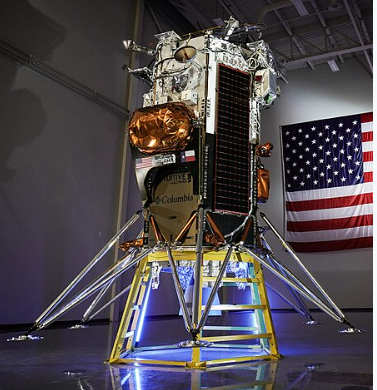
You can plainly see this design has too much vertical and not enough horizontal. It’s just asking to be tipped over. Here’s a more stable configuration of probe and widely-spread landing pads:
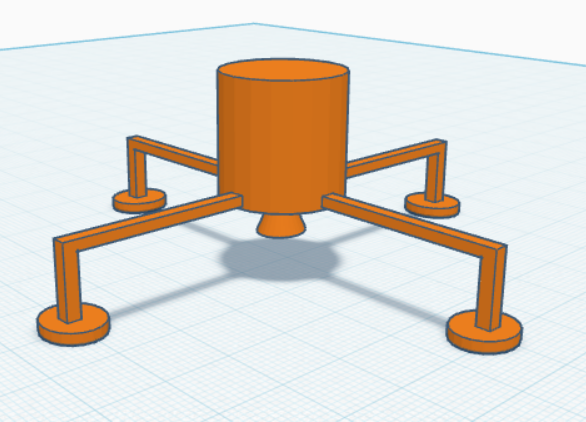
“But the landing legs will have too much mass penalty!” No they won’t. Lunar gravity is 1/6 Earth gravity, so the legs only have to be 1/6th as sturdy — meaning that their mass need be only 1/6 as much as Earth-based struts.
Whatever the cost penalty for the extra mass of widely spread landing legs, it’s nowhere near the cost of losing the entire probe.

 Engineer Zero