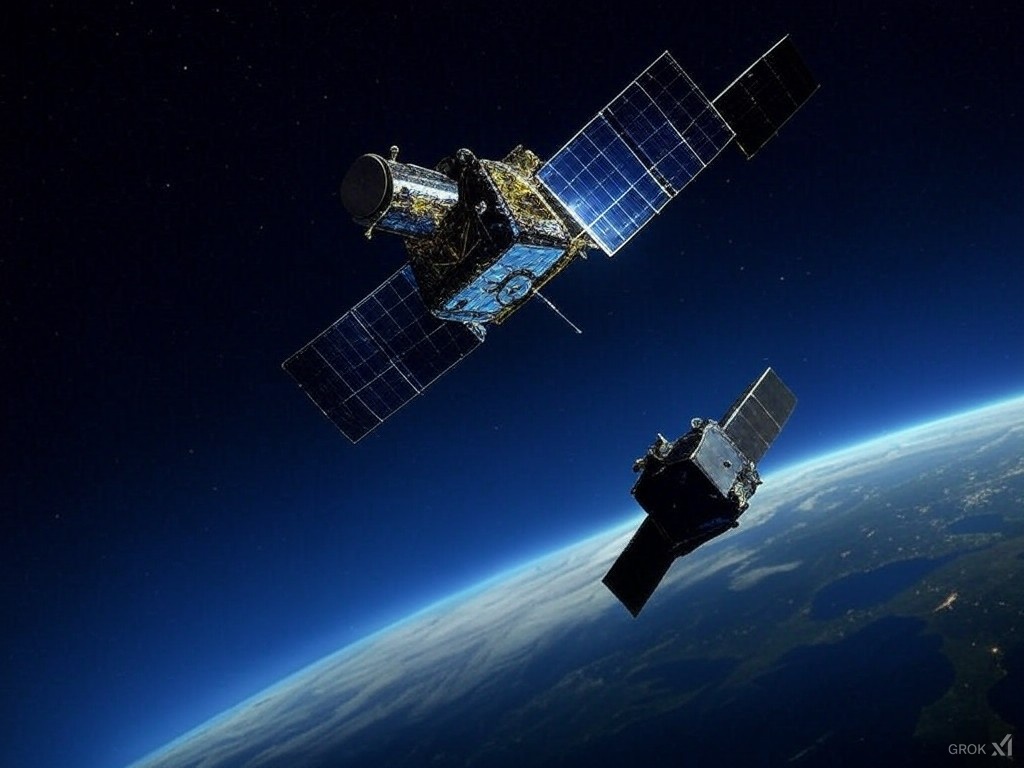
The book, When the Heavens Went On Sale, by Ashlee Vance, tells of a company called LeoLabs which operates a network of radar stations around the world. The stations track every object in Low Earth Orbit (= LEO, hence the name). Vance states, “The big stuff is easy enough to spot, but LeoLabs’ technology was so good that it could pick out objects just a couple centimeters in size.”
There is a growing concern that with so many objects in space now, the probability of a collusion is increasing dramatically. So LeoLabs is in the business of issuing alerts to its clients regarding whether another orbiting object is in danger of colliding with their orbiting object. With relative velocities of kilometers per second, such collisions could be fatal.
Vance: “In 2022, LeoLabs was sending out an astonishing 400 million collision alerts per month.”
Since 2022, thousands of additional satellites have been launched. Grok states that 2877 satellites were launched in 2023, while website Orbiting Now states that there are currently 7423 satellites in low earth orbit, the most crowded region. So the situation is only getting more intense.
The loss of a single satellite can be a multi-million to billion-dollar tragedy for its owner, but what of the danger of a loss of all satellites?
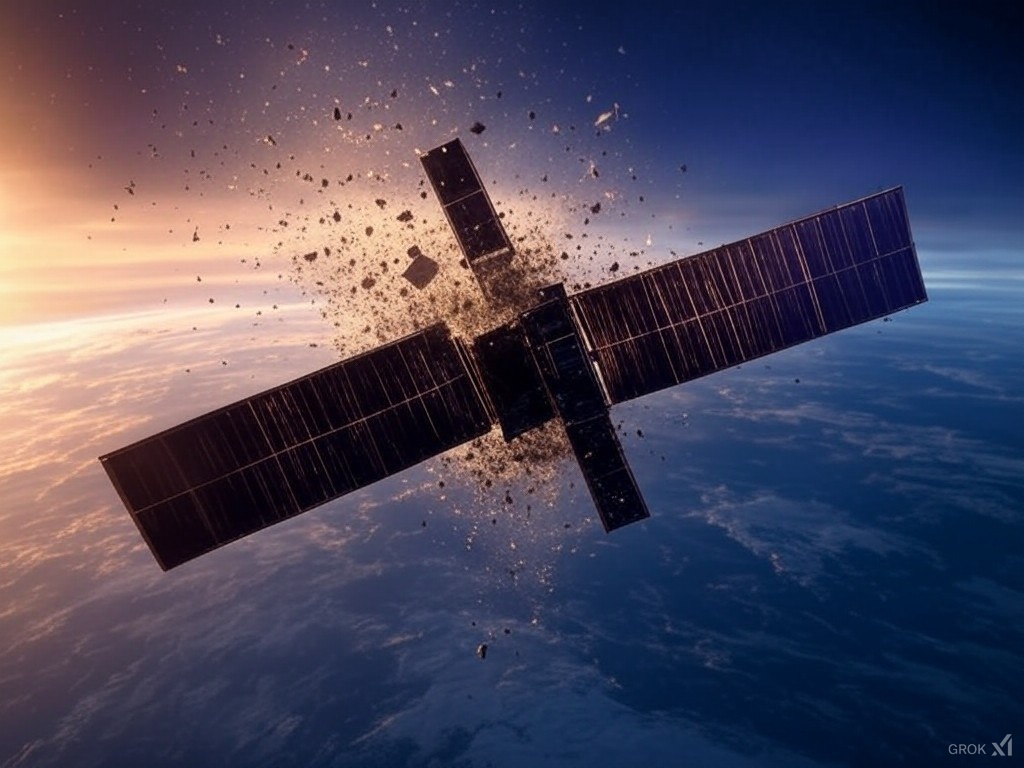
This is called the ‘Kessler Syndrome.’ A satellite is hit by another orbiting object with a velocity multiples of a bullet. The satellite fragments then become dangers to other satellites, and if those satellites are hit, even more fragments will be created. It’s like a nuclear chain reaction. It might not stop until Earth’s multiple satellite constellations are converted into clouds of useless debris posing a menace to future satellites and, of course, space exploration efforts that must pass through the debris clouds in order to reach the Moon, Mars, and other destinations.
So this is what we are doing to prevent the Kessler Syndrome:
- Satellites are equipped with maneuvering rockets so that when alerts are issued, they can be commanded to move out of the way of onrushing objects.
- Satellite are assigned carefully calculated orbits that will avoid collision with other satellites.
- Obsolete satellites are de-orbited.
- Satellites with limited missions (such as research ‘cubesats’ are placed in low orbits where atmospheric density is enough to gradually cause orbital decay and re-entry.
In addition to an accidental Kessler Syndrome, it’s possible for anti-satellite missiles and lasers to destroy the military satellites of other nations. The best tracking system in the world won’t be able to stop a Kessler Syndrome then, and we must wonder if that will bring the Space Age to an end (though of course a war between major world powers would do that too).
In the future, ground-based lasers may be used to de-orbit space junk. However, what if a military attack on satellites deploys pellets with stealth technology? If tracking radar can’t see the targets, the lasers can’t destroy the targets.
It seems that while the spacefaring superpowers will tolerate the reconnaissance satellites of their adversaries, using satellites for military command and control will incentivize the artificial creation of a Kessler Syndrome. That negates the value of such satellites, and as a side effect, puts a stopper on the Space Age. The only way to win this game is not to play.

 Engineer Zero